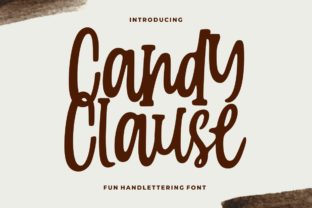
Candy Clause: A Sweet Script Font
As a small business owner, I know how much visual consistency can elevate a brand. Whether it's updating product labels or designing a new menu, the right font can make all the difference. That’s why I was excited to try Candy Clause, a script font that brings a whimsical charm to any design project.
What Is Candy Clause?
Candy Clause is a premium script font that feels both elegant and playful. Its flowing lines and soft curves give it a personal, handcrafted feel, making it perfect for brands that want to convey warmth and creativity. The font has a unique personality—like a friendly note from a loved one or a handwritten recipe passed down through generations.
It’s part of the Script Amp collection, which offers a range of expressive typefaces ideal for logos, packaging, and branding materials. Candy Clause stands out with its smooth strokes and balanced structure, ensuring it looks great in both digital and print formats.
Real-World Use Cases
I tested Candy Clause on a few real business projects, starting with a bakery’s packaging. The bakery wanted to update their box design to feel more inviting and professional. Using Candy Clause for the logo and product names gave the boxes a fresh, cohesive look that felt both modern and nostalgic.
Another project involved a skincare brand redesigning their label. The clean, minimal aesthetic of the product needed a font that could add a touch of personality without overpowering the message. Candy Clause worked well as a title font, adding a sense of care and craftsmanship to each product description.
For a café menu refresh, Candy Clause was used in the headings and special offers. It added a subtle flair that made the menu feel more engaging, while still maintaining readability for customers scanning the options.
When to Use Candy Clause
Candy Clause shines as a display font, especially for headlines, logos, and short phrases. It’s not the best choice for long paragraphs, but when used strategically, it can add visual interest and character to a design. For example, using it for a tagline on a business card or a product name on a sticker can make the design feel more memorable.
It also works well as a decorative accent. Pairing it with a clean sans serif font like Montserrat or Lato helps balance the design and keeps the overall look professional. This pairing is especially effective for social media graphics, website banners, or online shop visuals where clarity and style are both important.
Readability and Practical Tips
One thing to keep in mind when using Candy Clause is its legibility. While it’s beautiful in larger sizes, it can become difficult to read in small text, such as on product labels or mobile screens. For these cases, it’s best to use it sparingly or pair it with a more readable font.
When printing packaging or stickers, make sure to test the font at the intended size and resolution. High-quality prints will show off the font’s details better, while low-resolution outputs might make the characters look blurry or uneven.
On social media thumbnails or Instagram posts, using Candy Clause as a headline or overlay can catch attention without overwhelming the viewer. Just keep the text short and the background simple to maintain visual balance.
Font Pairing and Design Ideas
If you're looking to expand your design toolkit, consider pairing Candy Clause with other fonts from the Script Amp collection. A bold serif font like Playfair Display can create a sophisticated contrast, while a handwritten font like Great Vibes adds a casual, organic feel.
For a more modern look, combine Candy Clause with a minimalist sans serif like Poppins or Roboto. This pairing works well for websites, email newsletters, or digital ads where clarity and style are key.
Before finalizing any design, check the font’s file formats and licensing. Candy Clause typically comes in multiple weights and includes alternate characters and ligatures, which can help customize the look for different applications. Make sure the license allows for commercial use if you’re planning to apply it to products, packaging, or client work.